



When the test discovers
a system you didn't know you had.
A 4 AM CaptiveAire kitchen suppression semi-annual on a brand-new install. An experienced technician. Twelve cylinders on the asset list, distributed across four hoods and remote cabinets. Only the obvious ones got counted before the test started — and System Two fired anyway.
- Subject
- Accidental discharge during semi-annual
- Systems
- 4 × CaptiveAire wet-chemical
- Cylinders
- 2 + 3 + 3 + 4 = twelve (we thought)
- Outcome
- 4 cylinders discharged · 6 appliances coated · no injuries
- Coordinator
- Stanislav Samek · Samektra
- Filed
- May 2026 · 14 min read
Chapter I · Four AM, A Brand-New Kitchen
The kitchen had been in service for two months. A brand-new build-out: four hoods instead of one, four CaptiveAire wet-chemical suppression systems instead of two Ansul, twelve cylinders we knew about instead of a handful. Bigger surface to protect, bigger system to service, and a learning curve our facilities team was still climbing.
My role here is the one that comes before and after the visit. I set the inspection on the schedule, coordinate the vendor and engineering, collect the service report, and compare results year over year. I am not the technician. I do not make discharge decisions. I take notes and I make sure the right people are in the right place at the right time.
This semi-annual was already an exception before we walked through the door. The contractor who'd serviced the previous two-Ansul setup had declined the new install — they didn't have real CaptiveAire experience at this scale, and they were upfront about it. We pivoted to a vendor we'd worked with for years on other facilities — a vendor that had earned our trust on two-tank CaptiveAire jobs at sister sites. They were not new to us, just new to this kitchen.
Confidence is a useful thing in a technician. It is also the thing that, on a system you have not seen before, can quietly become the assumption that you do not need to slow down.
We scheduled it for 4 AM, after overnight cleaning, before breakfast prep. The line was clean and immaculate — stainless polished, every appliance staged for the day. The morning prep crew was already in, working pre-service routines on the cold side of the room.
The technician was experienced, careful, had been testing kitchen suppression systems for years. The system still fired. That is what makes this story worth telling.
Chapter II · Counting the Cylinders
The vendor's tech arrived on time — a long-time CaptiveAire technician. We met the night-shift engineer at the fire-alarm panel first, placed the FACP on test, then walked together to the kitchen. He brought the breaker key and the kind of patience you want from an engineer at four in the morning. The first job of the night was not testing — it was finding out what we actually had.
The four-system layout matched our records. Where the building disagreed with the records was the cylinder count.
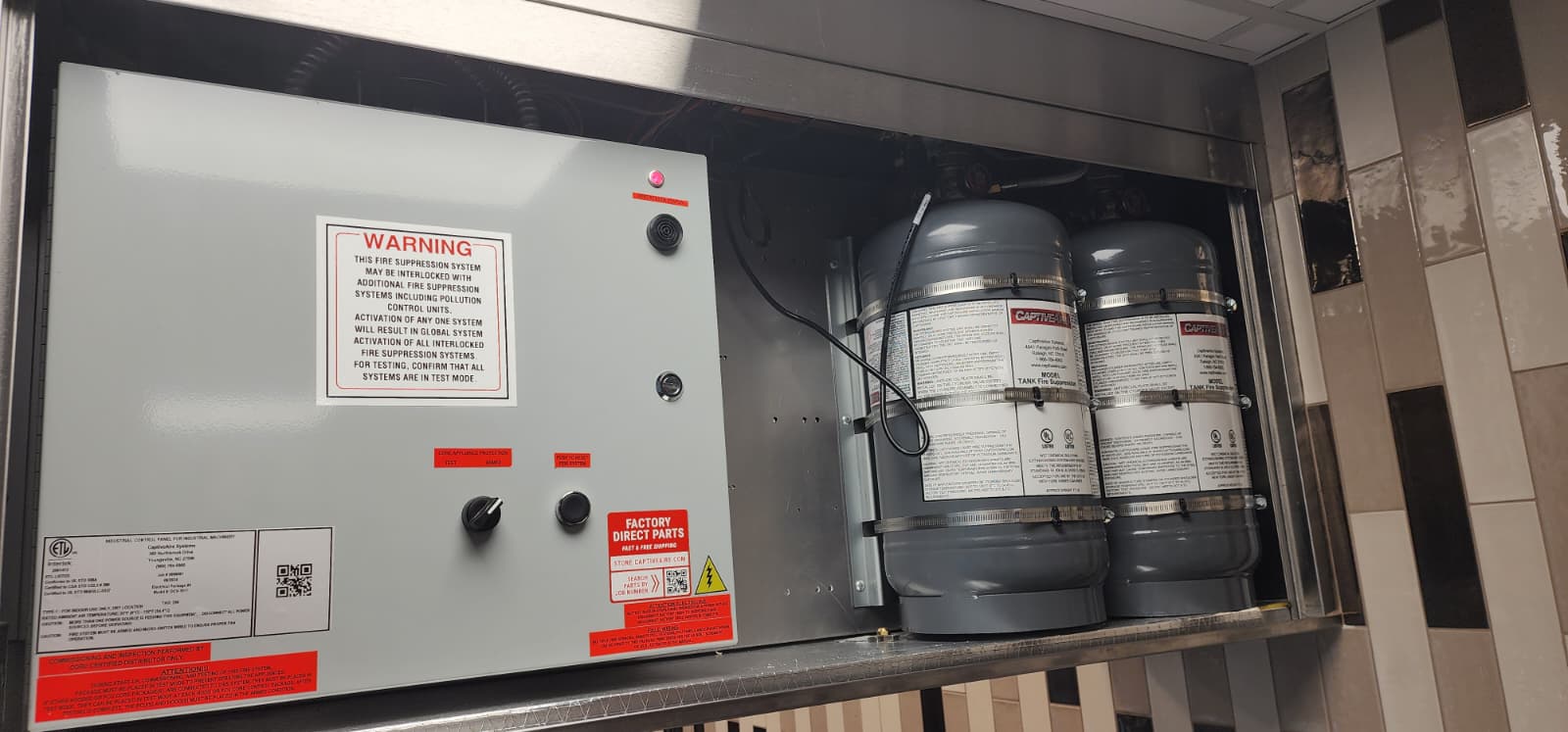
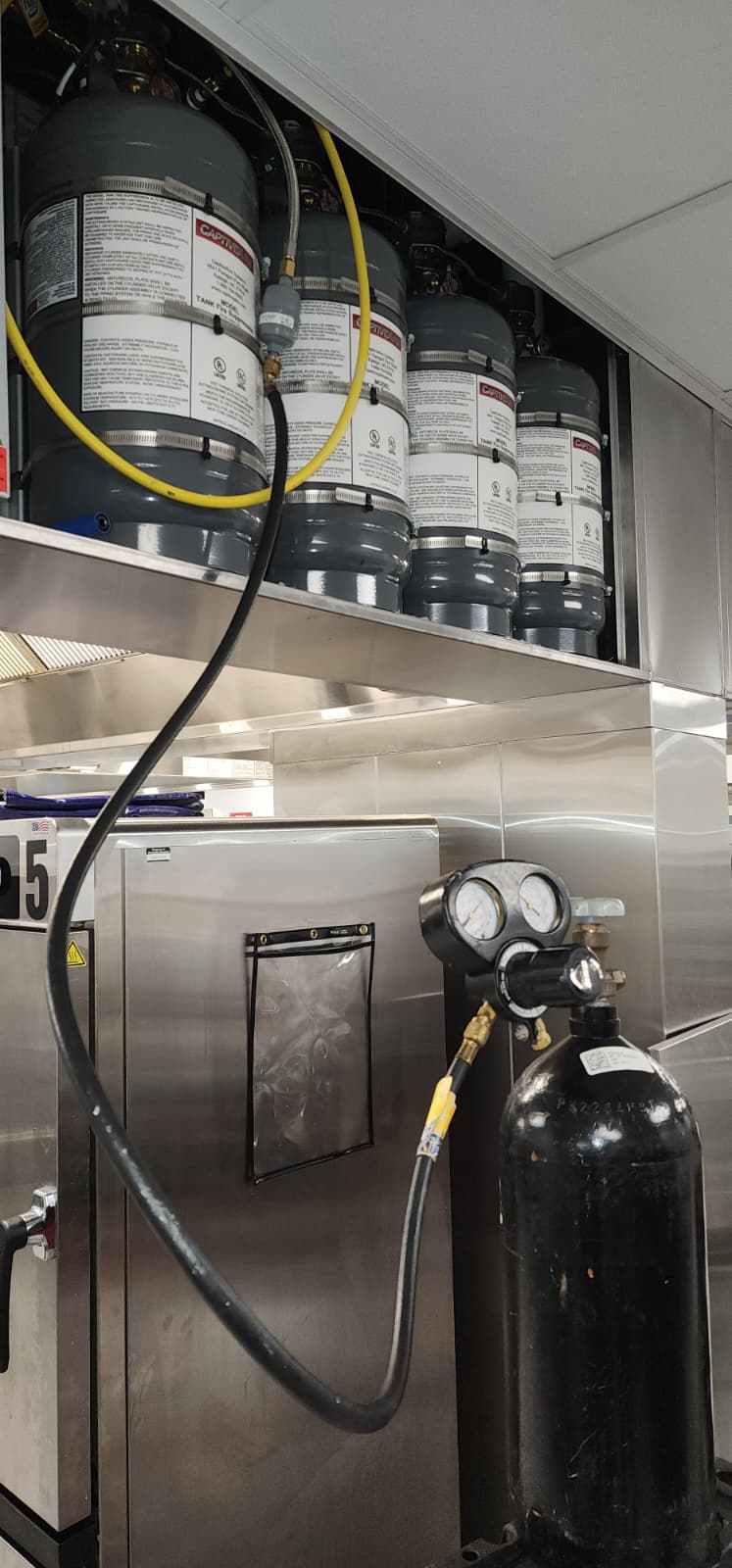
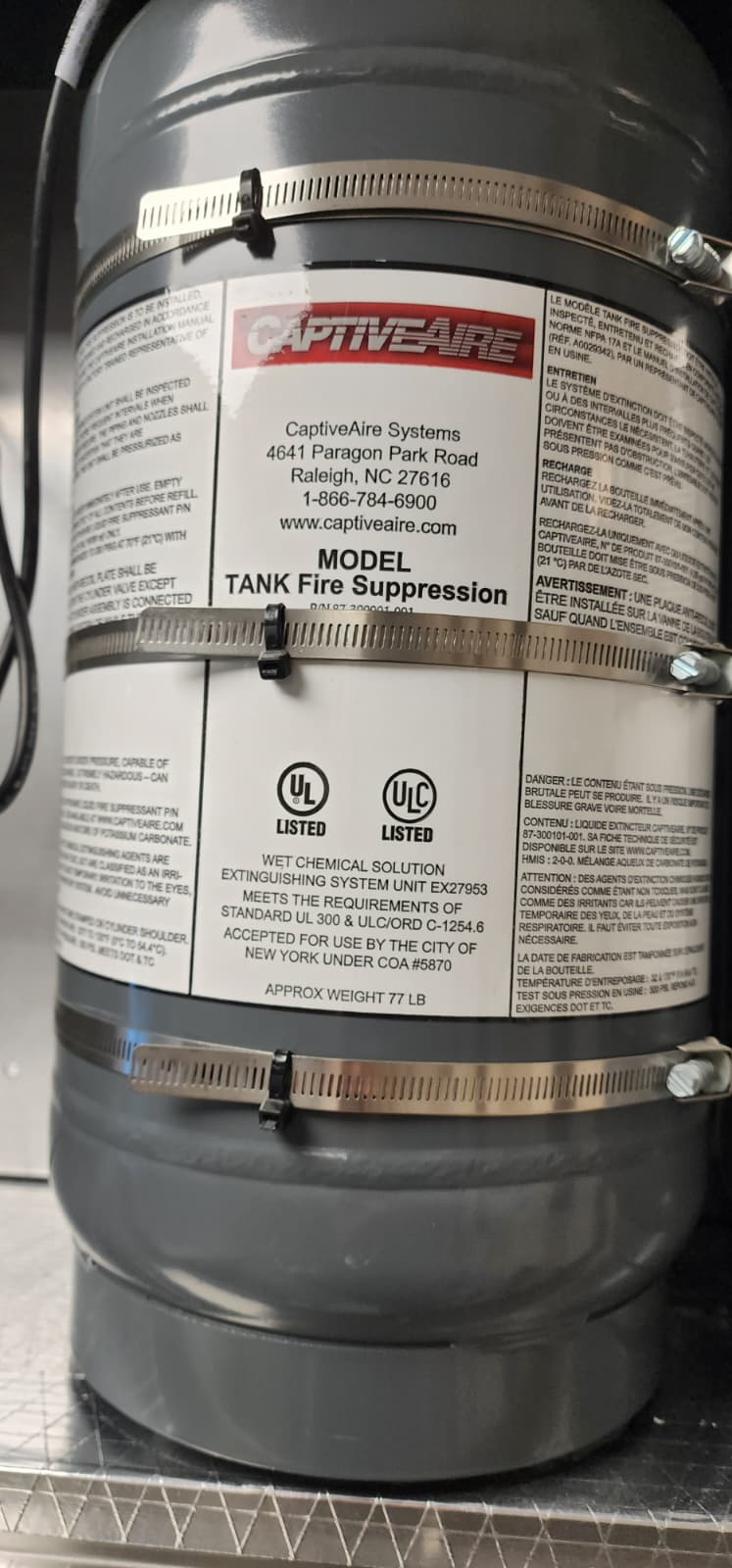
Inside the hood enclosures and on the wall
- ☐Four separate suppression systems, one per hood — that part matched.
- ☐Twelve cylinders total, distributed 2 + 3 + 3 + 4 across the four systems. (or so we counted)
- ☐Four manual pull stations — red, wall-mounted, one per system, near each hood.
- ☐Control panel and breaker panel mounted on the wall near the hoods.
- ☐The main electrical room down the corridor — located, in case we needed it.
Looking at this list now, the question that should have been asked out loud is whether twelve cylinders made sense for the cooking surface we were protecting. We had walked through, located what we could see, and accepted it. We did not stop and run the design math against what we were looking at. Twelve was the asset-list number. Twelve was what the previous closeout package had said. Twelve was therefore what we expected.
The math we should have done in that ninety-minute walk: count the appliances, look up the CaptiveAire design density, and verify the cylinder count was right. We did not. We checked off the inventory and moved to the test plan.
Chapter III · Blueprint of the Kitchen
Here is what we drew on the back of a service ticket while we walked. Four hoods. Twelve visible cylinders. Four pull stations. What is missing from the drawing is what we missed in the building: a remote cylinder cabinet ten feet down the wall, fed by the same actuation line as System 02. Press Reveal hidden cabinet to see what was actually live.
Chapter IV · The Test the Way It Should Go
System One — four cylinders
System 01 was the easy one. Two-cylinder hood, all gear visible, all of it within an arm's reach of the panel. The technician disconnected the actuator line on each cylinder, capped them per the OIM, dropped the gas valve, verified the FACP supervisory came in, dropped the breakers on the cooking equipment, verified the kitchen-shutdown contacts at the panel, restored, re-armed, and we walked it back together. Clean test. Two pages of report. Two cylinders to recharge if anything had gone wrong, which it did not.
System Two — three cylinders, or so we thought
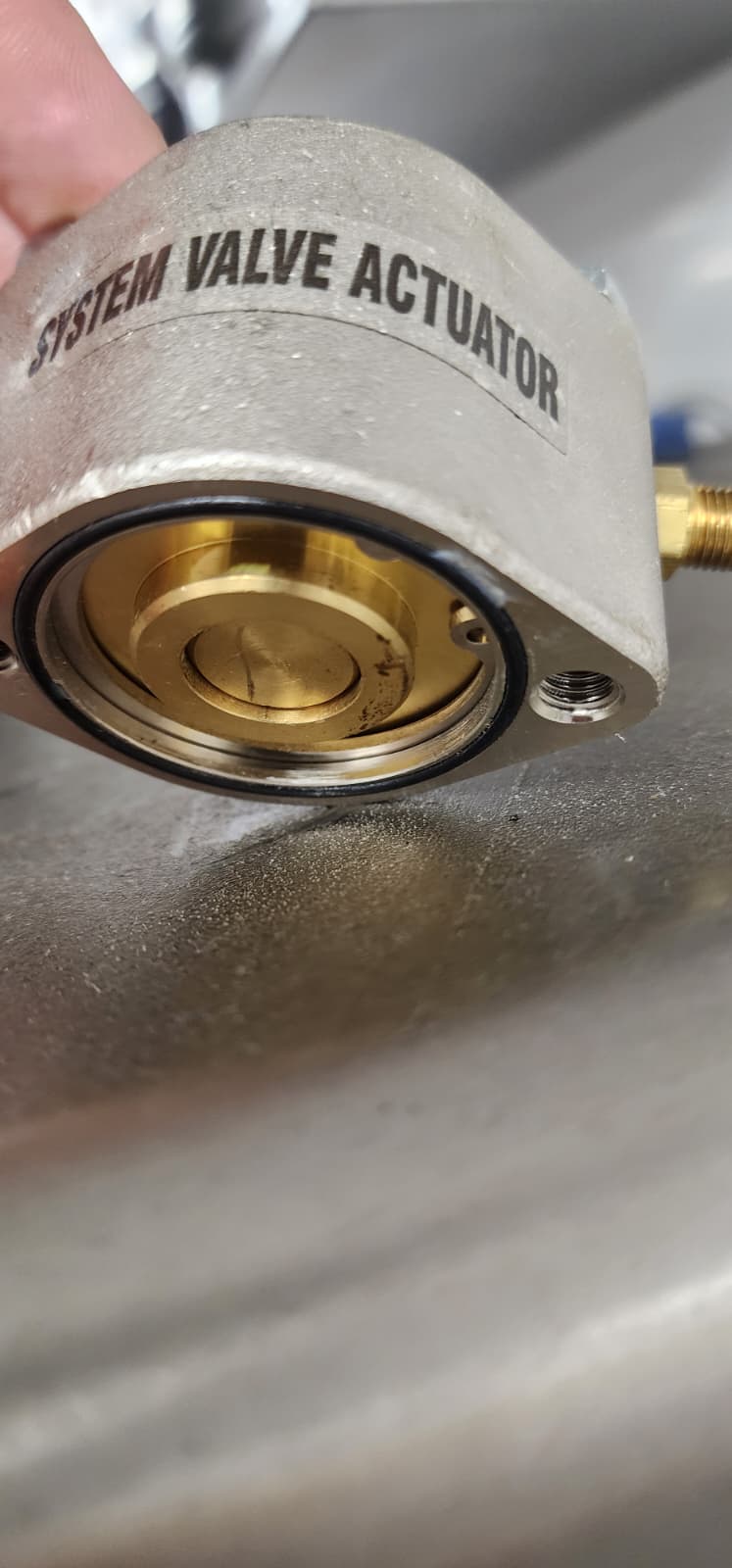
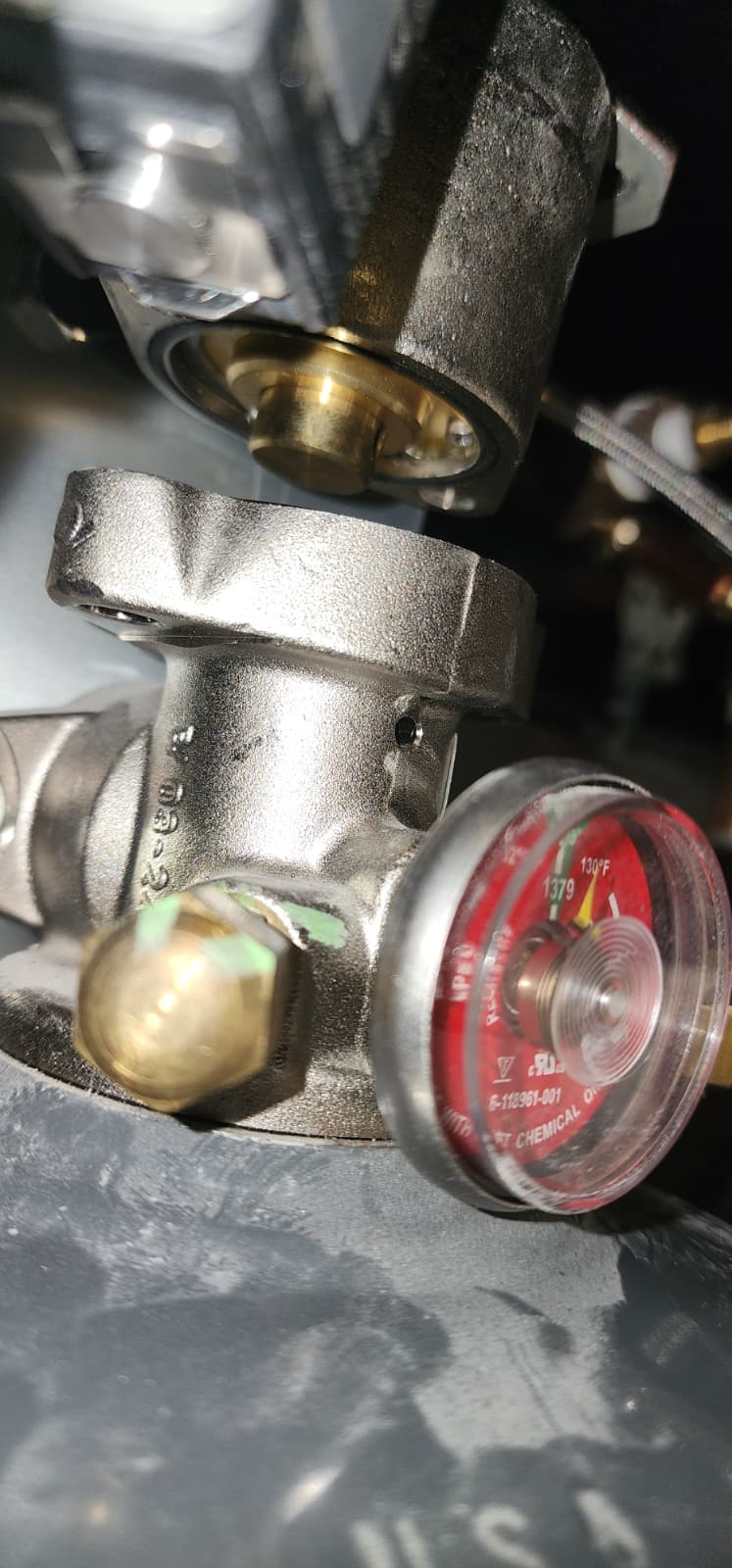
The same routine started on System 02 — disconnect the actuator on each visible cylinder, run the panel test sequence. The first two cylinders, inside the hood enclosure, came down clean. The third sat in a small wall cabinet just outside the hood, also disconnected. Three accounted for.
The technician walked back to the panel. The supervisor stepped over and we ran the discharge test sequence on System 02. The actuation pulse left the panel. The pulse traveled the copper line. The three accounted-for actuators were disconnected.
And four more actuators, ten feet down the wall in a remote cabinet none of us had walked to, were not.

The four hidden cylinders in the remote cabinet fired. Wet chemical agent left those four cylinders, traveled the agent line, and discharged through the System 02 nozzles onto six appliances under Hood 02. The hidden bank emptied in less than a second.
The other three zones were untouched. Hoods 01, 03, and 04 stayed pristine. The prep crew on the cold side of the kitchen was untouched. The technician was untouched. The supervisor was untouched. Nobody was injured.
The discharge alarm contact in the suppression panel went into alarm. Because we'd put the FACP on test before we started, the building alarm did not transmit and the fire department was not dispatched. That, more than anything else, was the choice that made this a recoverable incident instead of a multi-truck response in the middle of the night.
Chapter VI · Tracing the Copper to the Other Cabinet
Once the kitchen was secure and the prep crew moved to a different room, we lifted ceiling tiles and traced the actuation line out of the panel. It went up into the ceiling, ran along a beam, crossed a wall, and dropped down into a remote cabinet ten feet down the corridor on the back side of the kitchen wall.
The cabinet was a standard CaptiveAire wall-mounted enclosure. Four cylinders, fully charged, fully armed, fully connected by actuation line and agent line to System 02. Atypical, but not wrong. The install team had run out of hood-side wall space on System 02 and had used a remote cabinet to terminate the rest of the cylinders. The closeout drawings had documented it. The closeout drawings had not made it to our facilities team. The asset-list cylinder count of three on System 02 had come from a count of what was visible inside the hood — not from the cabinet ten feet away.
The lesson was not that the install was wrong. The lesson was that the walk-through had not traced every actuation line to its termination before the test started. Every line, every cylinder, every termination.
smooth is fast.
fast is fired.
Chapter VII · The Cleanup, the Vendor, the Restoration
The vendor's senior tech and the supervisor were on-site within forty minutes of the discharge, with a cleanup crew already dispatched and a recharge plan in motion. They documented every nozzle, every appliance, every contaminated surface. They acknowledged the remote cabinet had been missed in the walk-through. They warrantied the recharge of the four discharged cylinders, the cleanup of the six appliances, and the contaminated food in the prep area.
The kitchen was back in service for breakfast prep within five hours. The fire marshal was notified later that morning by the vendor — required by AHJ rule any time a fixed suppression system discharges, even in service. The system was re-inspected and re-tagged that afternoon by a licensed technician. The post-incident report went into the file the same week.
The vendor stood up. That mattered. A vendor that argues over who pays for what at the moment of a discharge is a vendor you don't bring back. A vendor that says we missed it, here is the recovery plan, the recharge is on us — that is the vendor you bring back, with an extra hour built into every future schedule.
The Six Lessons This Story Teaches
Trace every actuation line
Before any test discharge, walk every actuation line from the panel to its termination. Lift ceiling tiles. Open service panels. Find every cylinder before you press anything.
Run the design math out loud
Don't accept the asset-list cylinder count without checking it against the cooking surface and CaptiveAire design density. Twelve was right. We just didn't verify it.
Schedule the deepest off-shift
4 AM was the only reason this story doesn't have an injury. A daytime discharge lands on people. Schedule the off-hours window every time, even if it costs more.
FACP on test before you start
Putting the building alarm on test before any suppression service is non-negotiable. It's the difference between a vendor cleanup and a multi-truck fire-department response.
A confident vendor can rush
Familiarity with the brand isn't familiarity with the building. New install, new walk-through, new pace. Slow down.
Closeout docs save the next person
If you're the installer: label the panel, tag the line, leave a one-page diagram zip-tied to the cylinder. Make the next technician's job easier. They are coming.
Frequently Asked Questions
"The day you stop counting cylinders out loud is the day the system fires anyway."
The maximum we can do for the next person who walks into a kitchen suppression test is build the walk-through that we wish had happened here. Every line traced, every cylinder counted, every cabinet opened, every panel verified. Not faster. Not by skipping. By doing the work that makes the discharge button safe to press.
The fire marshal does not grade you on schedule pressure. The vendor does not. The cooks do not. They grade you on whether the kitchen is open and safe at 6 AM. Slow is smooth. Smooth is safe. Safe is what you go home with.